

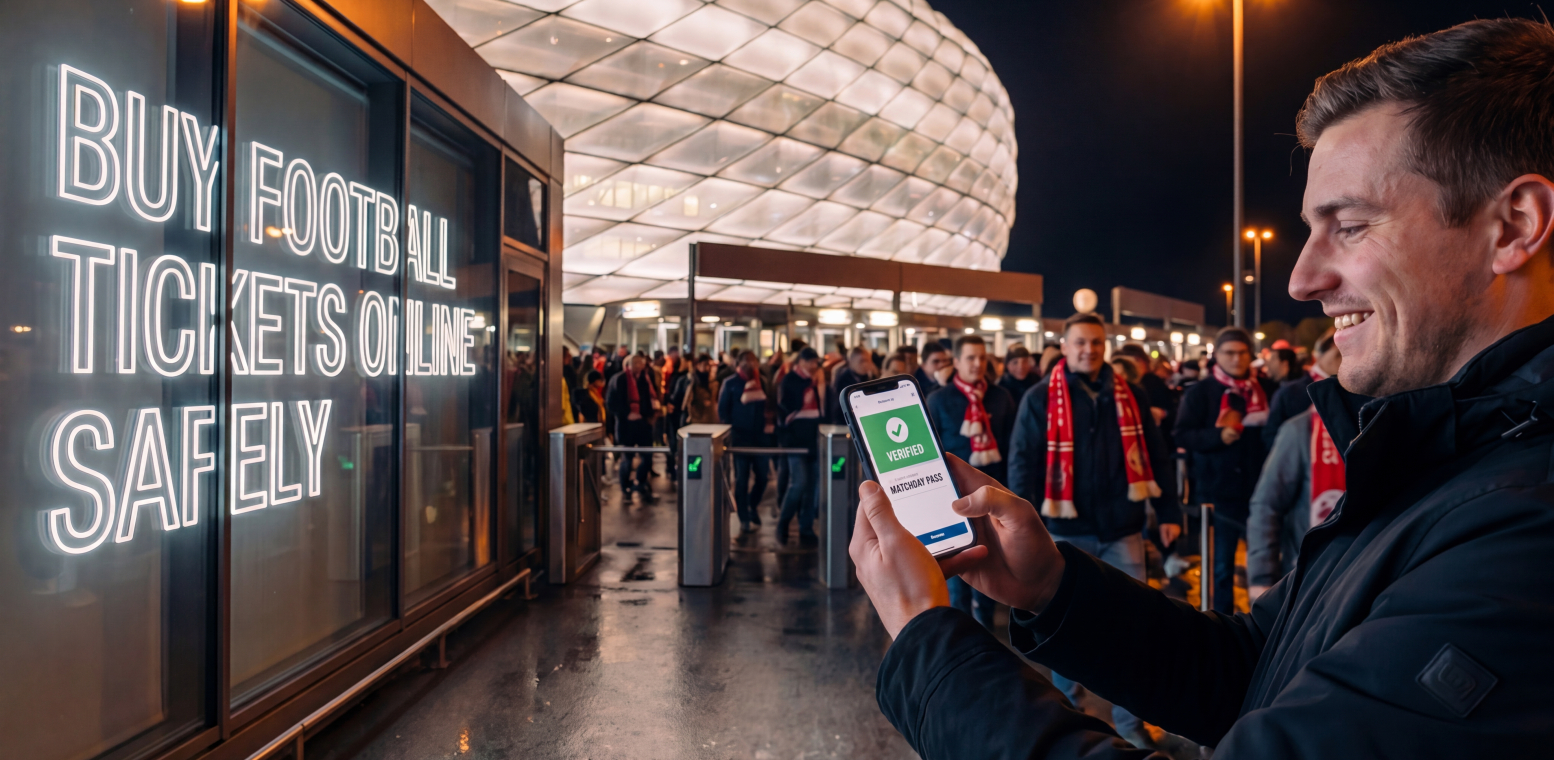
Buying Football Match Tickets Online Safely
21 May 2026
Big matches rarely wait for perfect timing. You see the fixture, check the date, and realize you need football match tickets online before prices move or availability shrinks. That urgency is normal, especially for derby games, title-deciders, European nights, and other high-demand fixtures where primary inventory disappears quickly.
Buying tickets online is convenient, but convenience alone is not the real issue. What matters is whether the marketplace gives you enough clarity to make a confident purchase. When fans are traveling, coordinating with friends, or planning around a single matchday, the difference between a smooth order and a stressful one usually comes down to transparency, protections, and support.
Why football match tickets online require careful buying
Football is one of the most supply-constrained live event categories. Stadium capacities are fixed, away allocations are limited, and the biggest clubs have global demand far beyond local season ticket holders and member sales. That means online buying often becomes the practical route for fans who missed the first sales window or are trying to attend a match while traveling.
The upside is access. The trade-off is that not every listing environment offers the same level of confidence. Seller-priced inventory can be a real advantage because it opens up options for sold-out events, but buyers still need to understand what they are paying for, what protections exist, and how delivery will work.
This is where a professional marketplace matters. A reliable platform does more than display listings. It should communicate pricing clearly, apply security checks, explain order coverage, and make support available if something changes before kickoff.
What to check before you buy
The first thing to look at is the event detail itself. Club, competition, date, kickoff time, and venue must all be clear. Football schedules can shift because of broadcast selection, cup progression, or policing decisions. If you are booking travel around a match, flexibility matters. A Saturday fixture may move to Sunday, and that can affect flights, hotels, and your preferred delivery window.
Seat location is the next priority. Not all sections offer the same experience, and not every buyer wants the same thing. Some fans want a premium central view. Others care more about atmosphere and want to be closer to the home support. If you are attending with family or first-time matchgoers, section choice can matter just as much as price.
Then look closely at how the listing describes quantity and seating. If you need two, three, or four seats together, that should be addressed upfront. Many problems start when buyers assume seats are adjacent and the listing language says otherwise. A trusted marketplace should make those details easier to review before payment rather than after it.
Price transparency matters more than the lowest number
Fans often start with the cheapest visible ticket, but that is not always the best buying decision. A lower headline price can look attractive until fees, delivery details, or seat quality make the total value less favorable than another listing.
Transparent pricing helps buyers compare real options, not just teaser numbers. That matters even more for high-demand football matches where prices can change quickly based on opponent, form, competition stakes, and inventory depth. A league match in August is not priced like a title race in April, and a Champions League knockout night is rarely comparable to a routine domestic fixture.
There is also a timing question. Buying earlier usually gives you more choice. Waiting can sometimes produce a better price, but it can just as easily reduce availability or leave you choosing from weaker sections. For marquee matches, the safer assumption is that access gets tighter as the event gets closer.
How marketplace protections reduce risk
When buying football match tickets online, trust is built through process, not slogans. Buyers should expect clear order coverage and visible safeguards that explain what happens if an issue arises.
A 100% order guarantee is valuable because it addresses the biggest concern directly - whether you will receive valid tickets for the event you planned around. Security checks also matter because they create a control layer between buyer and seller. In a marketplace setting, that intermediary role is one of the main reasons many fans choose a specialized ticket platform rather than taking chances in less structured channels.
Customer support is another sign of buying confidence. Football ticket orders are time-sensitive. If delivery timing changes, if the match date moves, or if you need help understanding a listing, responsive support is part of the product. It is not an extra. For international buyers especially, knowing there is a clear support path can make the difference between booking now and hesitating until the best options are gone.
Football match tickets online for sold-out and international games
Some fixtures are difficult long before public sale begins. Premier League rivalries, El Clasico, Champions League ties, and major cup finals attract buyers from well beyond the home market. For US travelers planning a football trip in Europe or the UK, this is often the point where the primary channel is no longer realistic.
Secondary-market access fills that gap. It gives fans a route to inventory that would otherwise be unavailable, particularly for sold-out matches or events with restricted official distribution. The key is using a marketplace that treats access and protection as equally important.
That balance matters because international buyers usually have more at stake. They may be booking flights, setting aside vacation days, and arranging an entire trip around one fixture. In that situation, broad inventory is valuable, but confidence in the transaction is just as valuable.
Common mistakes buyers make
One common mistake is focusing only on team names and not the exact competition. Clubs can face the same opponent in different contexts, and the experience, pricing, and demand can vary significantly between league, cup, and European matches.
Another mistake is underestimating delivery timing. Some football tickets are transferred closer to matchday, especially for high-demand events. That is not automatically a red flag, but buyers should know what to expect and when. Clear communication around delivery can prevent unnecessary stress.
A third mistake is treating all sections as interchangeable. Behind-the-goal seats, sideline seats, upper-tier views, and hospitality-style options attract different buyers for good reason. The right seat depends on whether you value atmosphere, sightline, budget, or comfort most.
Finally, some buyers wait too long because they hope prices will collapse. That can happen in certain live event categories, but football often behaves differently when demand is emotionally driven and inventory is limited. If the match is a must-attend event, securing a strong option earlier is often the better decision than gambling on a last-minute drop.
What a reliable buying experience should feel like
A good ticket-buying experience should feel straightforward from search to checkout. You should be able to compare listings easily, understand total pricing, review seating information, and know what protections support your order. If any of those basics are unclear, confidence drops fast.
This is why professional marketplaces continue to matter in sports ticketing. They bring structure to a category where urgency is high and availability changes quickly. For buyers, that means a better chance of finding the right match, the right seat, and the right level of reassurance without wasting time.
For example, a platform like Seatpin is built around that marketplace role - giving buyers access to hard-to-get live event tickets while supporting the order with transparent communication, security checks, and a stated guarantee. That combination is especially useful when the event matters enough that you do not want uncertainty to be part of the plan.
Choosing the right moment to buy
There is no single perfect buying window for every football match. It depends on the club, the opponent, the competition, and how badly you need a specific section or seat quantity. If your plans are fixed and the event is central to a trip, buying earlier usually makes more sense. If you are flexible on section and price, you may have more room to watch the market.
The real question is not whether you can save a little by waiting. It is how much risk you are willing to accept in exchange for that possibility. For many buyers, especially those traveling or attending a once-in-a-season fixture, certainty has real value.
The best ticket purchase is not always the cheapest one. It is the one that gets you into the stadium with clear expectations, reliable support, and no avoidable surprises when matchday arrives.