


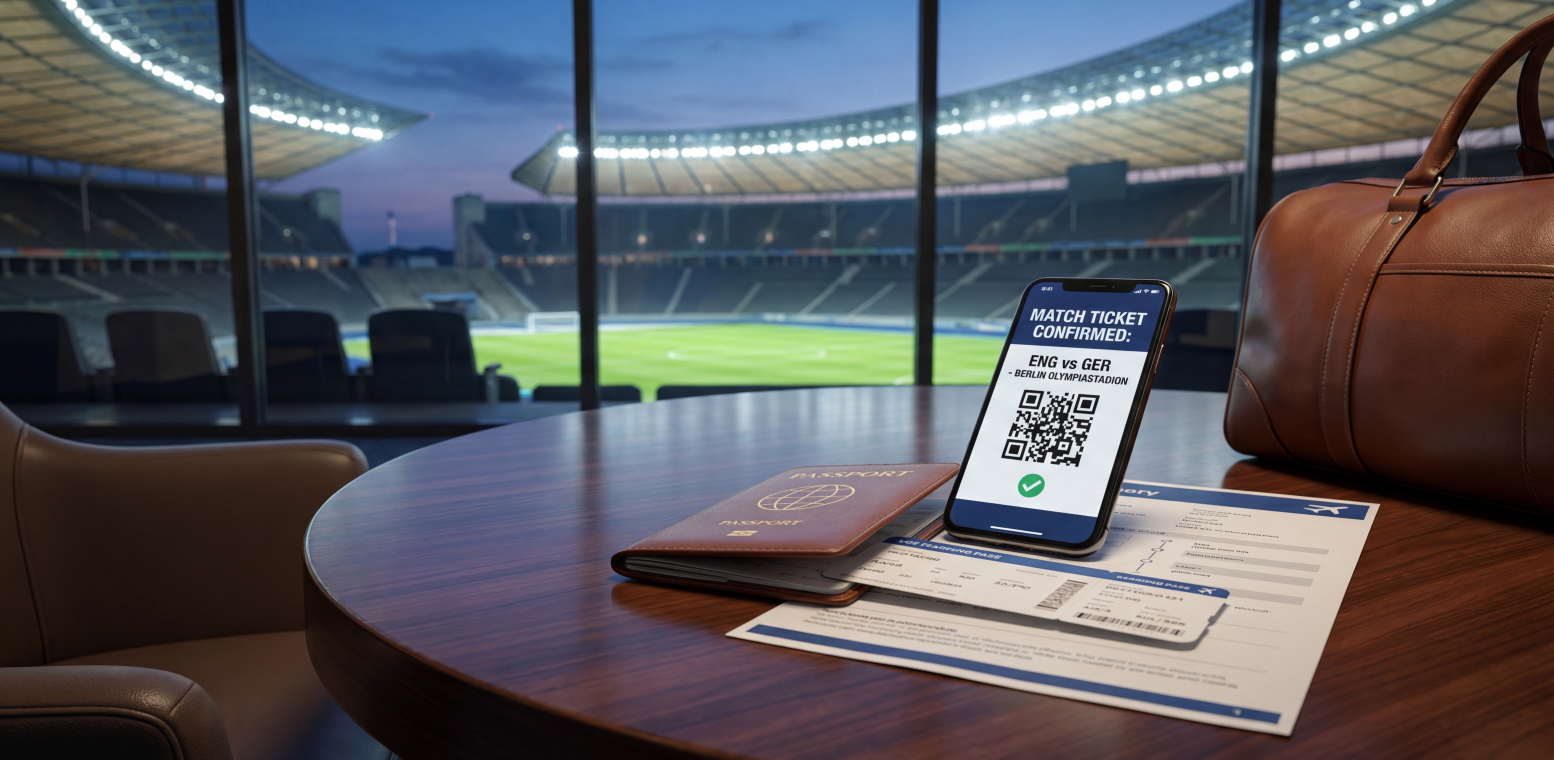
Guide to International Match Tickets
12 June 2026
The difference between a great trip and a frustrating one often comes down to a single detail - whether your ticket is actually sorted before you board the flight. A good guide to international match tickets should help you avoid last-minute uncertainty, understand how the market works, and buy with more confidence when demand is high.
Why international match tickets work differently
Buying tickets for a local game is usually straightforward. Buying for a major international fixture is not. You are often dealing with different release schedules, different ticketing rules, language barriers, limited allocations, and heavy demand from both home fans and traveling supporters.
That complexity increases when the match is part of a major tournament, a rivalry fixture, or a club competition with global appeal. Prices can move quickly, inventory can appear in waves, and the cheapest option is not always the safest or most practical one. If you are traveling, the ticket is only one part of the cost. Timing, location, delivery method, and entry requirements matter just as much.
This is why buyers often turn to marketplaces when official channels are sold out, restricted, or simply not workable for travelers. The key is understanding what you are buying and what protections matter.
A practical guide to international match tickets before you buy
Start with the event itself. Not all matches carry the same level of demand, even within the same competition. A group-stage international may have broad availability for weeks, while a derby, semifinal, or title-deciding fixture can tighten fast. If your trip depends on that event, waiting for a perfect price can backfire.
The next thing to check is the stadium and the ticket category. International match tickets are rarely just about getting in. Seat location affects atmosphere, view, fan segregation, and in some cases whether the experience actually fits your plan. A lower-tier sideline seat and an upper-corner seat are not interchangeable products, even if both are technically available.
You should also think about who you are traveling with. A solo traveler can be more flexible on price and section. A family or group usually needs adjacent seats, which narrows inventory and can push the cost up. The earlier you lock that in, the better your chances of finding suitable options.
When to buy and when to wait
There is no universal best moment to buy. It depends on the match, the competition, and how risk-tolerant you are.
For ultra-high-demand matches, buying earlier often means paying for certainty. That can be the right move if you are already booking flights and hotels. A slightly higher ticket price may be cheaper overall than changing travel plans later because inventory disappears.
For matches with deeper supply, waiting can sometimes open up more choices. Sellers adjust prices as the event gets closer, especially when they need to move inventory. But this works best if you can accept some uncertainty. If the match is a bucket-list event, a major international rivalry, or part of a tightly planned trip, waiting is usually a gamble rather than a strategy.
A useful rule is to match your buying timeline to your travel exposure. The more money you have tied up in transportation and accommodations, the less sense it makes to leave the ticket unresolved.
How pricing really works
One reason buyers get confused is that international match tickets do not move in a straight line. Prices are driven by supply, demand, team form, travel patterns, and timing. If a star player returns from injury, a team reaches a knockout round, or supporters begin traveling in larger numbers, the market can react quickly.
Seller-priced marketplaces reflect that reality. Prices may be above face value, but they also create access when official inventory is gone or unavailable to your location. For many buyers, that trade-off is simple: paying market price is preferable to missing the match entirely.
What matters is transparency. You should know what you are paying, what seat type you are getting, and what guarantee or support applies to the order. Cheap listings without clarity can become expensive problems.
Understanding seat categories and sections
In any guide to international match tickets, seat quality deserves more attention than it usually gets. Buyers often focus only on price, then realize too late that section choice changes the entire experience.
Behind-the-goal sections can be ideal if you want atmosphere and singing support. They may be less ideal if you want a wider tactical view of the match. Sideline seats usually offer the best balance for viewing, but premium central locations cost more for a reason. Upper tiers can still provide a strong experience in modern stadiums, though proximity and angle vary a lot by venue.
There is also the question of home and away fan areas. This matters more than many travelers expect. Wearing the wrong colors in the wrong section can create a poor experience, and some matches have stricter segregation rules than others. If you are traveling specifically to support one side, section placement is not a small detail.
Delivery, entry, and matchday logistics
The ticket itself is only part of the transaction. You also need to know how it will be delivered and what is required for entry.
Some international match tickets are delivered digitally, which can be convenient when timing is tight. Others may involve mobile transfer procedures, PDF delivery, or event-specific account processes. The right format depends on the organizer and the event. The important point is clarity before purchase, not after.
Entry requirements can also vary. Certain events may require ID matching, app-based access, or specific instructions closer to matchday. That does not mean the order is risky by default, but it does mean buyers should expect event-level rules to differ across competitions and venues.
If you are flying in from the US, keep time zones in mind. Customer support responsiveness, delivery timing, and event updates all matter more when you are not local. This is where buying through a marketplace with clear communication and order protection has real value.
What to check before placing an order
A reliable purchase starts with a few practical checks. Confirm the event date and kickoff time, but also be aware that some fixtures can move for broadcasting, cup progression, or policing decisions. That is especially relevant when you are booking travel around a match that has not been fully finalized.
Review the number of seats, whether they are together, and how the seating category is described. If you need side-by-side seats, do not assume that multiple tickets automatically means adjacent placement. Read carefully.
Then look at the marketplace protections. A stated guarantee, security checks, transparent pricing communication, and accessible support are not just nice extras. They are part of the product. When buyers are purchasing in-demand international inventory, confidence matters.
Common mistakes buyers make
The biggest mistake is treating all ticket listings as equal. They are not. Two listings for the same match can differ in section quality, delivery method, seat grouping, and purchase protection.
Another common issue is underestimating timing. Buyers spend heavily on flights and hotels, then hesitate on the actual match ticket as if that part will sort itself out later. Sometimes it does. Often it does not.
There is also a tendency to chase the lowest visible price without considering the full picture. A slightly more expensive listing with clearer seat details, dependable support, and a strong order guarantee may be the better buy.
Finally, some travelers forget to account for the wider matchday experience. Stadium access, local transportation, section rules, and arrival times all affect how smoothly the day goes. Your ticket should fit your plan, not complicate it.
Choosing a marketplace with confidence
If you are buying outside official sales windows or for sold-out events, the marketplace itself matters. You want a platform that is clear about pricing, serious about security checks, and available when you need support. That is especially important for cross-border purchases, where event rules and delivery processes may be less familiar.
Seatpin fits that need by focusing on access, transparent communication, and order protection for high-demand live events. For international match buyers, that combination matters because the transaction is not only about finding a ticket. It is about reducing uncertainty around a trip that already has time, money, and expectation tied to it.
The smartest way to buy is not always the cheapest or the fastest. It is the option that gives you the right seat, for the right match, with the right level of confidence. If the game is worth traveling for, your ticket should feel settled well before matchday.